Too much data, too little orientation
Cyclists already collect enormous amounts of information. The problem is rarely missing data; it is understanding which signals matter now and how they relate to the next training decision.
The goal was to turn years of cycling data into orientation: what happened, what it means and what should come next.
I developed the product idea, defined how the training information should be interpreted and built the native prototype around the questions athletes actually ask.
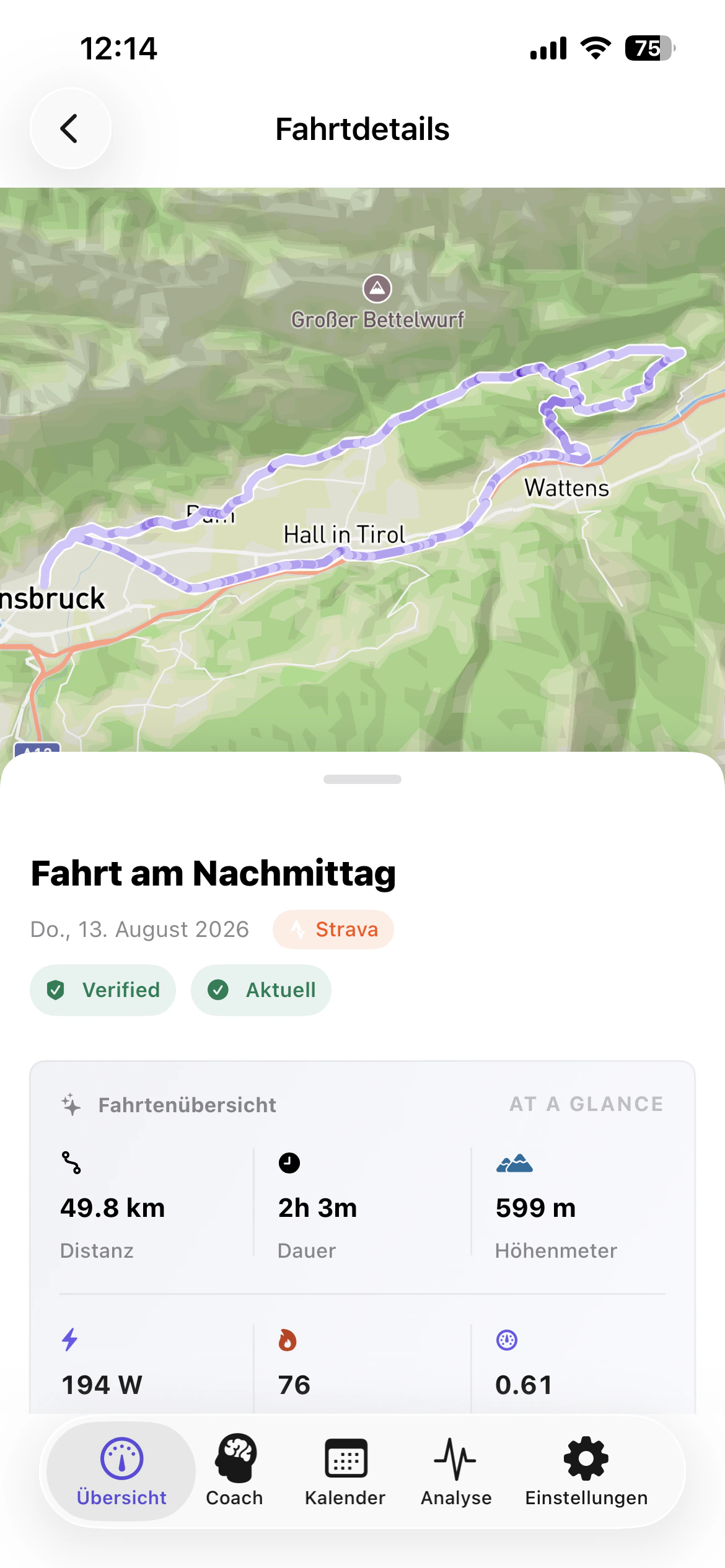
Instead of switching between isolated charts, athletes get one understandable view of their training, their current context and the next useful action.
Cyclists already collect enormous amounts of information. The problem is rarely missing data; it is understanding which signals matter now and how they relate to the next training decision.
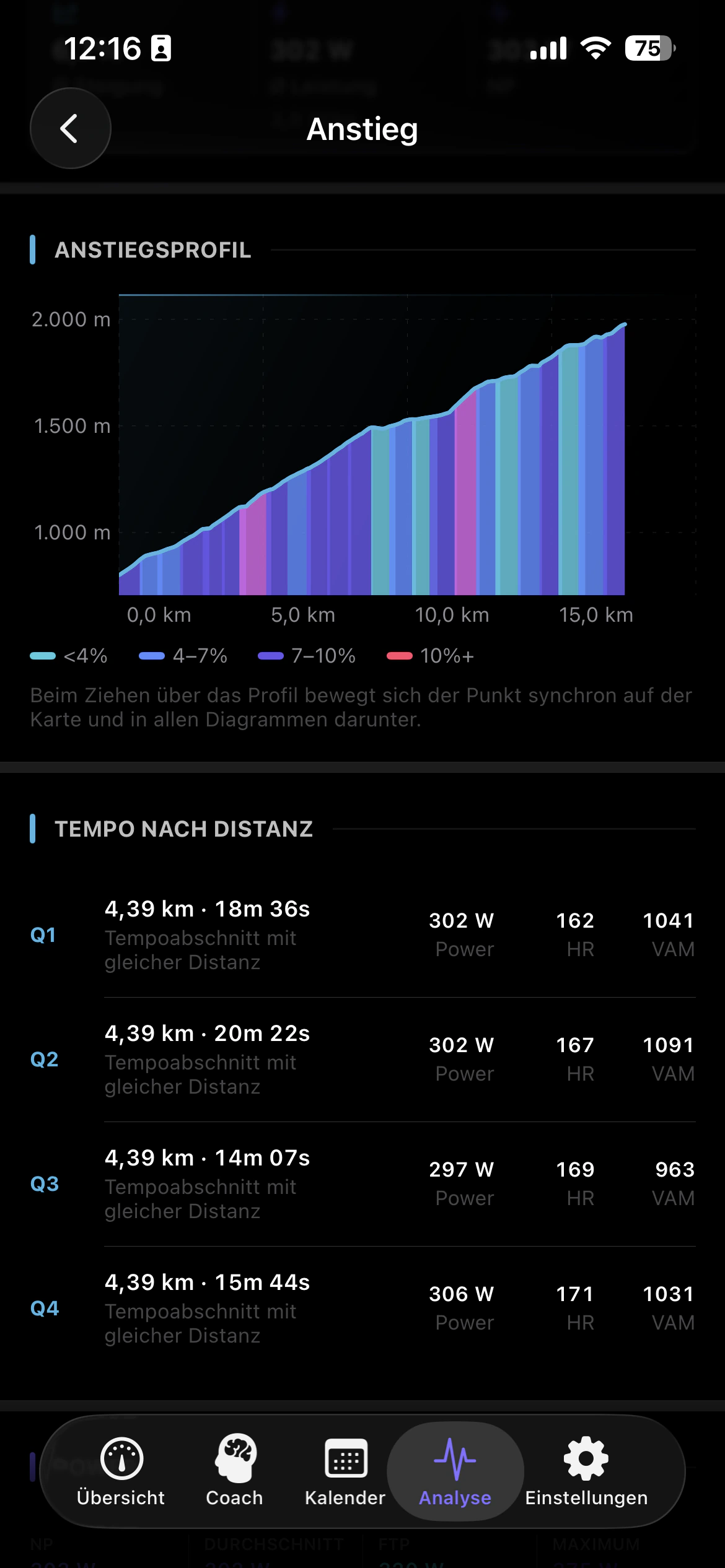
Completed rides, performance development, intensity distribution and planned sessions live in the same product. Each screen answers one clear question instead of presenting another dashboard full of numbers.
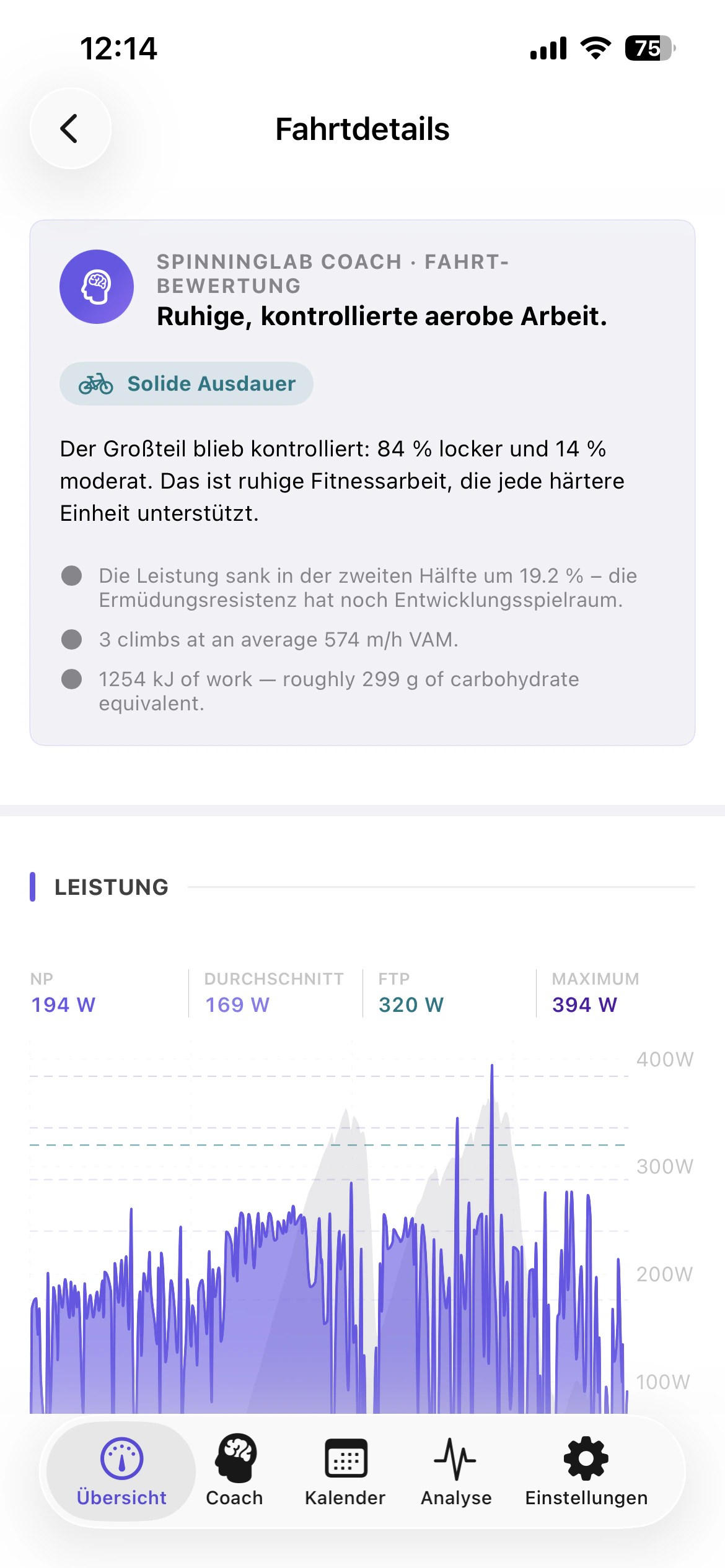
The coach uses the athlete's recent training and planned sessions to explain the current situation in plain language. It supports decisions without pretending that an algorithm knows the athlete better than the athlete or coach.
SpinningLab is a functional concept prototype, not a publicly released medical or coaching product. It demonstrates product thinking, sports-science translation and native application development with real-world data structures.
Screens shown use real prototype states and training histories. Sensitive account and athlete information remains private.